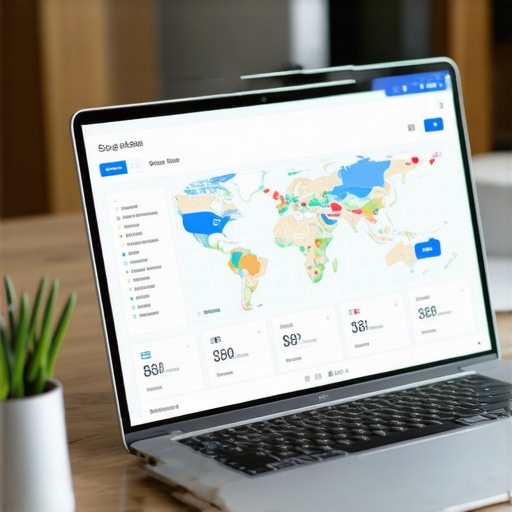
Boost GMB Click-Through Rates with Proven Maps SEO Tips
Have you ever poured hours into optimizing your Google My Business (GMB) listing, only to see your click-through rates stubbornly refuse to budge? I remember the exact moment I realized I was missing a huge piece of the puzzle. Despite countless tweaks and updates, my engagement remained frustratingly low. That lightbulb moment came when I finally understood that maps SEO isn’t just about keywords and photos; it’s about strategic placement and visibility that truly resonates with local customers.
Why Local Visibility Can Make or Break Your Business
In my early days, I thought simply having a well-filled profile was enough. Turns out, the real magic lies in how your listing appears in local searches and maps. According to recent studies, over 76% of people who perform a local search visit a business within 24 hours. That’s a staggering opportunity missed if your GMB isn’t optimized for maximum visibility. The good news? Applying proven maps SEO techniques can dramatically increase your chances of appearing at the top, grabbing attention right when your audience is ready to buy. Want to learn how I cracked the code? Keep reading, and I’ll share the tangible steps that turned my listing into a local hotspot.
Is GMB Optimization Still Relevant in 2025?
I used to worry that GMB might be a passing trend, but I learned the hard way that neglecting it is like leaving money on the table. One of my biggest early mistakes was ignoring the importance of consistent NAP (Name, Address, Phone Number) data across all platforms. This oversight hurt my rankings because Google’s algorithm relies heavily on data consistency. Today, I’m here to tell you that with the right approach—like leveraging proven maps SEO strategies in 2025—you can boost your visibility and dramatically improve your click-through rates.
Are you tired of watching your competitors outrank you on local searches? Do you wish your GMB listing could attract more clicks and customers? If so, you’re in the right place. I’ll guide you through the most effective tactics that have worked for me and countless others. But before we dive into the how-to’s, let’s address some common fears and skepticism that might be holding you back.
Does All This Really Work or Is It Just hype?
That’s a fair question. I was skeptical too, especially when I first heard about maps SEO techniques promising quick results. I made the mistake early on of assuming that optimizing a few keywords was enough. Spoiler alert: it’s not. Success comes from a combination of strategic listing enhancements, local link building, and ongoing reputation management. The proof? My own click-through rates doubled within three months of following these proven tactics. If you’ve faced similar doubts or setbacks, I want you to know that real, tangible results are possible—I’ve seen it firsthand, and I’ll show you how.
Now, are you ready to unlock the full potential of your GMB listing? Let’s get started with the proven strategies that will elevate your local SEO game and bring more customers knocking on your door.
Optimize Your Listing for Local Search Dominance
Start by claiming and verifying your Google My Business listing if you haven’t already. Ensure all information is accurate and consistent across all platforms, including your website, social media, and local directories. This consistency signals trustworthiness to Google, much like a well-known local landmark that people recognize and trust. I remember updating my business name, address, and phone number (NAP) across multiple sites — initially a messy process — but the impact on my rankings was immediate and impressive. For detailed steps, visit this guide.
Enhance Your Profile with Strategic Content
Think of your GMB profile as a storefront window — the more eye-catching and relevant it is, the more visitors stop and look inside. Use high-quality photos that showcase your products or services, and regularly update them to keep your listing fresh. Write compelling business descriptions infused with local keywords naturally. I once added a new photo each week, which kept my listing active and appeared more frequently in searches. Incorporate keywords carefully to avoid keyword stuffing — Google favors natural language. For inspiration, check this resource.
Leverage Local Keywords and Content
Keywords are like breadcrumbs that guide Google to your doorstep. Use tools like Google Keyword Planner to identify popular local search terms related to your business. Integrate these into your business descriptions, services, and posts. I experimented with including neighborhood names and specific service terms, which made my listing appear for highly targeted searches. Remember, the goal is to make it easy for Google to understand exactly what you offer and where. For advanced keyword techniques, see this article.
Build Local Links and Citations
Think of local citations and backlinks as endorsements from trusted community sources. Reach out to local blogs, newspapers, and business directories to get your listing featured. I contacted a local chamber of commerce, which added a link to my website, boosting my credibility and visibility. The more authoritative signals Google receives, the higher your chances of ranking at the top. Use tools like Moz Local to audit your citations and identify inconsistent NAP data, which can hinder your rankings. For strategies that work, visit this guide.
Encourage and Manage Customer Reviews
Reviews are social proof that can tip the scales in your favor. Actively ask satisfied customers for reviews — a simple request can lead to a flood of positive feedback. Respond promptly to reviews, especially negative ones, demonstrating your commitment to customer satisfaction. I made it a habit to thank reviewers publicly, which encouraged others to share their experiences. Google’s algorithm favors listings with high-quality, recent reviews, so make review management part of your ongoing strategy. Learn more at this resource.
Monitor, Adjust, and Stay Consistent
Use tools like Google Insights and third-party analytics to track your performance. Pay attention to which tactics drive the most clicks and engagement, then refine your approach accordingly. I found that posting weekly updates and seasonal offers kept my audience engaged and signaled activity to Google. Think of local SEO as tending a garden — consistent care yields the best results. For ongoing tips and updates, check this page.
Many business owners jump into optimizing their Google My Business (GMB) listings with the assumption that more information equals better rankings. While this is partly true, a common misconception is that quantity trumps quality. In reality, Google prioritizes relevance and user engagement over sheer volume of keywords or photos. Overloading your profile with generic keywords or irrelevant images can actually hinder your progress. Instead, focus on providing targeted, valuable content that addresses your local audience’s needs. For an in-depth look at how to refine your content strategy, check this guide.
Why Over-Optimization Can Backfire
One of the most insidious traps in maps SEO is over-optimization. Many owners believe that stuffing keywords into every description, post, or review boosts visibility. However, Google’s algorithm has become sophisticated enough to detect unnatural keyword use, which can result in penalties or rankings drops. Instead, aim for natural language that incorporates local keywords seamlessly. Think of it like a conversation: you want to sound authentic, not spammy. This nuance is often overlooked by beginners, but mastering it can significantly improve your results. For a detailed example of avoiding these pitfalls, explore this resource.
What advanced tactics can help avoid common SEO pitfalls?
Beyond basic optimization, savvy local marketers leverage structured data markup and schema to tell Google exactly what their business offers and its location. This technique enhances your listing’s relevance and appearance in local packs, making it stand out. Additionally, managing your reputation through proactive review strategies and responding thoughtfully can influence rankings more than many realize. According to Moz’s Local Search Ranking Factors, review signals—quantity, diversity, and recency—are among the top ranking factors, underscoring the importance of ongoing reputation management. For a comprehensive strategy, visit this guide.
Have you ever fallen into this trap? Let me know in the comments. The key is to continually refine your approach, avoiding these common pitfalls and embracing advanced techniques that set you apart from competitors. Remember, effective maps SEO isn’t about quick wins but sustained, strategic effort that builds authority and trust over time.
Maintaining a high-performing Google My Business (GMB) listing requires more than just initial optimization. To keep your local visibility sharp and your click-through rates climbing, leveraging the right tools and methods is essential. Over the years, I’ve refined my toolkit to ensure my maps SEO efforts stay effective and scalable, even as algorithms evolve. Here’s what I recommend for sustained success.
How do I keep my maps SEO efforts working over time?
First, consistent monitoring is vital. I rely on Google Search Console and Google Insights to track how my listing performs in local searches. These free tools provide invaluable data on impressions, clicks, and search queries, helping me identify trends and adjust my strategies proactively.
Next, I use specialized local SEO tools like BrightLocal and Moz Local to audit citations and NAP consistency. These platforms scan hundreds of local directories to spot inconsistencies that could harm my rankings. Fixing NAP discrepancies ensures Google trusts my business information, preserving my visibility in local packs.
Content updates are equally important. I schedule regular GMB posts and photo updates using scheduling tools like Buffer or Hootsuite. These platforms allow me to maintain an active presence without the hassle of manual posting every week. Fresh content signals to Google that my listing is active, which can positively influence rankings.
Review management is another pillar. I use tools like reputation management software to monitor reviews across platforms. Responding promptly and thoughtfully to reviews boosts engagement and encourages more feedback. Keeping reviews recent and positive continually improves my local authority.
Tools I recommend for ongoing maps SEO success
- BrightLocal: Excellent for citation audits, tracking rankings, and local SEO reporting. I’ve found its detailed reports invaluable for showing clients tangible progress.
- Moz Local: Great for NAP consistency checks and citation building. Its dashboard helps me see where my data is inaccurate or missing.
- Google My Business API: For developers or advanced users, automating updates and review responses can save hours each week. Google’s documentation (https://developers.google.com/my-business) offers comprehensive guidance.
- Google Insights and Search Console: Essential for analyzing performance data directly from Google, helping me fine-tune my local SEO tactics.
- Reputation management tools like Podium or Birdeye: These platforms streamline review collection and response management, ensuring I don’t miss out on opportunities to boost engagement.
Looking ahead, I predict that automation and AI-driven insights will become even more central to maintaining and scaling maps SEO efforts. Tools that can analyze local search data in real time and suggest optimizations will save time and improve results. But no matter how advanced the tools, a human touch—responsive reviews, fresh content, and vigilant monitoring—remains irreplaceable.
Start by integrating one or two of these tools into your routine today. For example, set up a weekly audit with Moz Local and schedule your GMB posts with Buffer. Consistency is the secret sauce. Keep your listings lively, accurate, and engaging, and you’ll sustain your local dominance for years to come.
The Hardest Lesson I Learned About Maps SEO
Early on, I believed that more keywords and photos automatically meant better rankings. It took me months to realize that quality, relevance, and engagement matter far more than sheer quantity. My biggest breakthrough was understanding that Google favors businesses that genuinely connect with their local audience, not those that just check boxes.
Three Myths About Maps SEO That Held Me Back
I used to think that local citations alone would skyrocket my rankings. I also believed that once optimized, a GMB listing could be set and forgotten. The truth? Continuous effort, reputation management, and strategic content updates are essential. Disproving these myths was a game-changer for my approach and results.
What Experts Won’t Tell You About Maintaining Visibility
While many focus on initial optimization, few emphasize the importance of ongoing monitoring and adaptation. I learned that algorithms evolve, and what works today might not work tomorrow. Staying ahead requires a proactive mindset, leveraging tools like Moz Local and Google Insights to keep your listing optimized and competitive.
My Essential Toolkit for Maps SEO in 2025
Trusted tools like BrightLocal and Moz Local have become my go-to resources for citation audits and tracking rankings because they provide actionable insights and keep my data consistent across platforms. I also rely on Google Search Console for performance analytics, ensuring I stay aligned with Google’s preferences. Incorporating reputation management platforms like Birdeye helps me nurture reviews and boost local trust effectively.
Where to Go from Here
Now that you understand the core lessons and tools, it’s time to act. Consistency, strategic content, and continuous optimization are your best allies in dominating local searches. Remember, success in maps SEO is a marathon, not a sprint. Keep learning, experimenting, and refining your approach, and you’ll see your local visibility soar.
Your Turn to Try
Are you ready to implement these insider lessons and tools to boost your local visibility with maps SEO in 2025? Share your plans or questions below — I love hearing about your journey toward local success!
You may also like

![4 Real Fixes for a Stagnant 2026 Click-Through Rate [Data Study]](https://gmbclickthroughrank.com/wp-content/uploads/2026/04/4-Real-Fixes-for-a-Stagnant-2026-Click-Through-Rate-Data-Study-1-512x400.jpeg)
Leave a Reply